Raum
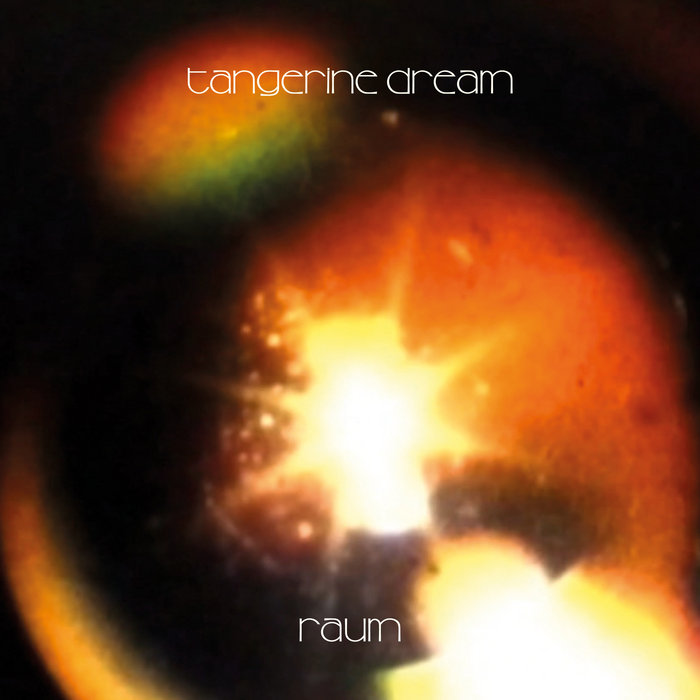
Raum finds its bearings in the patient movement of sequencers: patterns return, textures gather, and familiar shapes take on a different weight. Tangerine Dream's past is present throughout, but the record leaves room for the musicians carrying it forward.
Released on 25 February 2022, Raum brings together Thorsten Quaeschning, Hoshiko Yamane and Paul Frick, working with access to Edgar Froese's archived arrangements and recordings. That background gives the album a particular tension. There is an inherited language here, with all the expectations it carries, yet the useful question is what these musicians can still say through it. Across seven tracks, the answer rests on duration, repetition and the gradual adjustment of scale.
Continuum offers a compact way into that approach. Its recurring sequence and broken rhythm give the music direction, while the accumulating choral textures broaden the space around it. There is pleasure in the balance between a clearly defined pulse and sounds whose edges are less certain. The arrangements invite attention to the background as much as the foreground; small changes become consequential when the underlying pattern holds its course.
At just over nineteen minutes, In 256 Zeichen makes the album's demand on the listener explicit. This is music that needs an unhurried setting. The long form gives its ideas room to settle, although the same expansiveness may feel overgenerous to anyone waiting for a sharper turn. That reservation belongs to the record as a whole: its attraction depends partly on a willingness to stay with a passage after its basic shape has become familiar.
You're Always On Time brings wavetable synthesis and field recordings into that wider palette, while the closing title track returns to a substantial bass foundation. The latter's movement towards a sequenced peak, then towards violin, gives the ending a welcome change of emphasis. The acoustic presence matters within such an electronic setting: it introduces a different sense of touch without breaking the continuity of the piece.
Raum is most persuasive when approached without the burden of proving that a long-running group has either recovered an earlier peak or escaped it entirely. Its measured structures and spacious arrangements have their own purpose. Some passages ask for more patience than others, but there is value in that refusal to hurry. The record offers a sustained place for attention, and enough movement within it to make remaining there worthwhile.