Transmutation
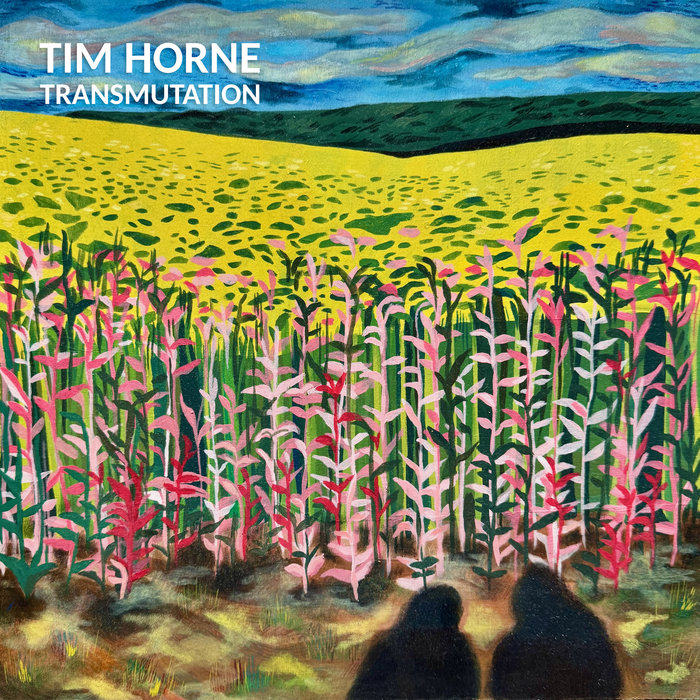
Transmutation turns personal transition into restrained cinematic ambient, tracing a path from isolation and uncertainty towards a qualified sense of renewal.
Released independently on 8 October 2026, Transmutation is an eight-track album by Margate musician Tim Horne. Written, performed and produced by Horne, with additional mixing and mastering by Thomas Farmer, it draws on synthesisers, acoustic instruments and field recordings. The record developed through two years of performances at Coastal Electronauts' live sessions and was completed towards the end of a long-term relationship, giving its themes of nostalgia, contradictory memory and personal change a specific emotional setting.
The opening sequence of Requiem, Halcyon and Biota establishes a sparse, cinematic language. Much of the material feels deliberately cold and minimally furnished, with darkness emerging through restraint rather than overt drama. Halcyon and Biota are particularly austere: their titles suggest serenity and organic life, yet the surrounding atmosphere makes both ideas seem distant or preserved in memory. That tension suits an album concerned with joy and sorrow occupying the same recollection.
At the centre, An Ocean Apart and Volta extend the sense of separation and change implied by the record's title. Horne's combination of electronic and acoustic sources avoids a simple opposition between the synthetic and the natural; field recordings instead place the composed material within recognisable spaces. The album remains controlled, sometimes almost withdrawn, and its limited gestures ask the listener to attend to small changes in texture and temperature.
Folie á Deux provides the clearest release from that severity. Birdsong and other outdoor sounds give the piece a warmer, more inhabited setting, while its arpeggiated melody introduces a stronger feeling of motion. The track has more life without abandoning the album's measured pace, and the contrast makes it the record's most immediately persuasive moment. Here, the field recording does more than supply atmosphere: it opens the music outward after the enclosure of the earlier pieces.
That warmth continues into Ascension, although its effect is more reflective than consoling. The track carries a pronounced sense of yearning, looking back even as its title implies movement beyond the past. Its placement before Metamorphosis gives the closing sequence a clear direction, but Horne avoids presenting transformation as a clean or triumphant resolution. Hope appears gradually and remains marked by the colder music that preceded it.
The album's compact palette can make its middle passages feel emotionally remote, and listeners drawn to more expansive ambient composition may find its reserve difficult to enter. Yet that distance is also central to its character. Transmutation treats change as an uneven process in which loss, tenderness and uncertainty persist alongside renewal. Its strongest pieces allow the world outside the synthesisers to enter, bringing warmth and movement to a record whose quiet severity otherwise holds those qualities at arm's length.